Introduction: Why Green Jobs Are Booming Now and the Role of Sustainable Labor Law Reform
Green jobs focus on environmental sustainability and can be found almost everywhere, including renewable energy, conservation, and sustainable agriculture. Green jobs are rapidly expanding in the U.S. due to major federal investments and private sector commitments to clean energy and climate solutions. From 2024 to 2026, the number of green jobs in the U.S. is exploding. Two major federal laws—the 2021 Infrastructure Investment and Jobs Act and the 2022 Inflation Reduction Act—are pumping hundreds of billions of dollars into clean energy projects. Add in private companies racing to meet net-zero pledges, and you have a job market that’s creating new positions every month.
This guide is for workers, job seekers, and advocates interested in green jobs and their workplace rights. Understanding your rights in this sector is crucial because, even in mission-driven or eco-friendly workplaces, the same employment laws apply and your protections remain intact. Green jobs are not exempt from labor laws, and knowing your rights ensures you can contribute to a sustainable future without sacrificing fair treatment or safety. Sustainable labor law reform is especially important as the green jobs sector grows. Labor law reforms are necessary to ensure the future of private-sector unionism and collective bargaining. The proposed PRO Act is a significant legislative effort aimed at shaping workplace representation and union organizing processes in green jobs, including changes to union election procedures and NLRB enforcement powers.
Green jobs include roles in solar installation, wind energy, electric vehicles, sustainable agriculture, environmental consulting, and climate technology. Growth is expected to continue through at least 2030 as federal tax credits and grants keep rolling out. Some estimates suggest over 1 million new clean energy jobs will be created by the end of the decade.
Many workers are drawn to these roles because they want their work to match their values. Protecting the planet and supporting healthier communities feels meaningful in a way that a traditional office job might not.
Punchwork is an employment firm that represents workers across all industries, including green and climate-related workplaces. We focus on wrongful termination, discrimination, harassment, retaliation, and EEOC matters.
Here’s what you need to know: even in mission-driven, eco-friendly workplaces, the same employment laws apply. Believing in the mission should never mean accepting illegal treatment.
Key Takeaways
- Green jobs are growing fast in the U.S. during 2024–2026 because of federal climate laws like the Infrastructure Investment and Jobs Act and the Inflation Reduction Act, along with massive private investment in renewable energy. Even in eco-friendly workplaces, your core labor rights are exactly the same as any other job.
- Being “green” or “mission-driven” does not excuse wrongful termination, discrimination, harassment, wage theft, or retaliation. Modern “inclusive” or “values-based” language can still hide old, illegal practices.
- A genuinely eco-friendly workplace has real sustainability actions, safe conditions, and fair policies. Watch for red flags like unpaid overtime, biased hiring, or punishment for raising safety concerns.
- If you suspect violations, document everything, use internal reporting (including HR) with realistic expectations, and know when to contact an employment attorney like Punchwork for a free consultation with a labor law attorney.
- New green jobs are opening up across the country, and U.S. programs offer incentives and re-skilling to help workers move from declining industries into clean energy roles—without giving up legal protections.
What Is a Green Job and What Is an Eco-Friendly Workplace?
Types of Green Jobs
The term “green job” is broader than most people think. It doesn’t just mean working for a big environmental nonprofit.
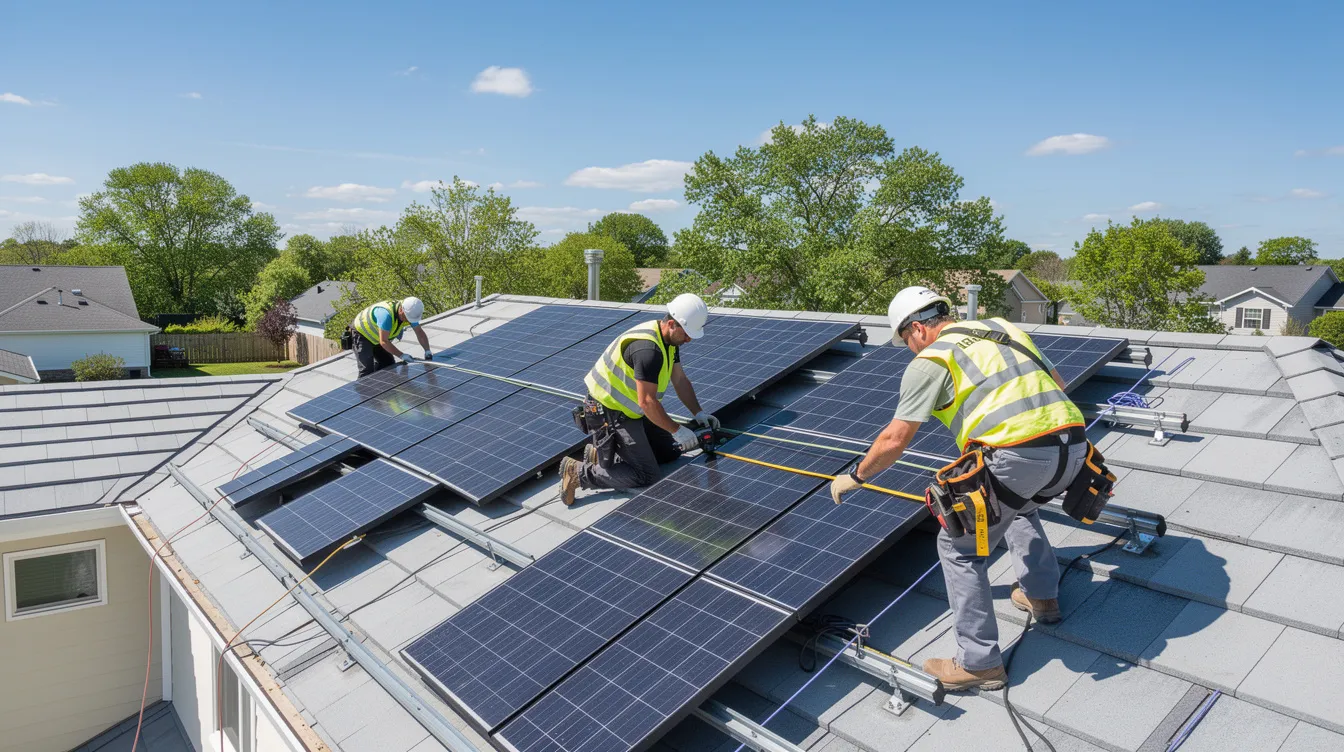
Green jobs include roles that directly reduce pollution—like solar panel installation or wind turbine maintenance. They also include positions that support sustainability and climate solutions, such as energy-efficient building design, climate data analysis, or sustainable farming practices.
Examples of Eco-Friendly Workplaces
| Workplace Type | Location Examples |
|---|---|
| Solar farms | Texas, California |
| Offshore wind projects | East Coast states |
| Battery manufacturing plants | Midwest |
| Recycling and circular-economy facilities | Nationwide |
| Corporate sustainability teams | Retail, tech, healthcare companies |
Key Features of Eco-Friendly Workplaces
What makes a workplace genuinely eco-friendly? Look for:
- Clear climate or sustainability goals with transparent reporting
- Investment in worker safety (fall protection on turbines, heat plans for outdoor crews)
- Policies that support equity and inclusion—not just marketing slogans
- Compliance with safety and health standards
A green job can be hourly or salaried, union or non union sector. It can be blue collar or professional. Being “green” does not automatically mean conditions are safe, fair, or legally compliant.
Now that we’ve defined green jobs and eco-friendly workplaces, let’s explore how these roles compare to traditional jobs.
How Green Jobs Differ From Traditional Jobs (And How They Don’t)
Unique Aspects of Green Jobs
Green jobs often feel different from traditional roles. Technology changes fast. Many employers have startup cultures with flexible (or chaotic) project timelines. Contractors and temporary workers are common, especially for seasonal builds like wind farms.
Ways green jobs may feel different:
- Heavy use of terms like “mission-driven,” “climate warrior,” or “all-hands startup”
- Pressure to work long hours to meet project or funding deadlines
- A culture that blends activism with work
- Frequent remote office work mixed with demanding field assignments
Many green employers rely on government grants and tax credits, which creates boom-bust cycles. When funding is tight or deadlines loom, management may cut corners—sometimes on safety.
What Stays the Same: Your Rights
But here’s what doesn’t change: under U.S. law, core protections remain the same.
Laws against discrimination (Title VII, the Americans with Disabilities Act, the Age Discrimination in Employment Act), retaliation, harassment, wage violations, and wrongful termination apply whether you install solar panels, manage a fossil fuel site, or work retail.
Titles like “fellow,” “volunteer-style role,” or “mission-based stipend” do not let employers skip minimum wage, overtime rules, anti-discrimination laws, or occupational safety obligations. If you’re doing regular work, you have employee rights—period.
The National Labor Relations Act protects workers’ rights to organize and engage in collective bargaining, regardless of industry. Union supporters and union representatives have the same protections in green jobs as anywhere else. A clear bargaining structure is essential for ensuring fair representation, resilient negotiations, and the enforceability of collective agreements.
Union organizing drives are common in green industries, as employees seek to secure fair treatment and workplace protections. During these drives, union organizers play a key role in advocating for employees and guiding them through the process, while union officers represent workers in collective bargaining and decision-making. A representation election is triggered when sufficient employee support is demonstrated—typically, support from at least 30% of the bargaining unit. Obtaining bargaining authority can involve processes like card-check or secret ballot elections. Many support secret ballot elections as a way to ensure employee choice and union accountability. Notably, the proposed Protecting the Right to Organize (PRO) Act seeks to replace secret-ballot representation elections with card-check procedures, which would change how unions obtain bargaining authority.
While the law does not require employers to agree to a contract or make any concessions, it does require good-faith bargaining. Bad faith bargaining—where one party pretends to negotiate but has no intention of reaching an agreement—is illegal and can be challenged under labor law.
As we move forward, let’s examine how modern language in green workplaces can sometimes mask old forms of discrimination.
Modern “Green” Language That Can Hide Old Discrimination
Age Discrimination in Green Jobs
Many green employers use modern, inclusive language in job ads and company culture. That sounds great. But the real test is how people are treated day to day.
Watch for phrases that can disguise age discrimination:
- “We’re looking for a digital native”
- “Ideal for recent grads only”
- “High-energy team that lives for 24/7 hustle”
These phrases often signal illegal age bias against workers over 40, even if they’re not stated directly. Job seekers should pay attention to this language.
Disability Discrimination
Disability discrimination can hide behind:
- “Culture fit” requirements
- “We need someone who can handle any conditions”
- Refusal to consider reasonable accommodations like modified schedules or assistive technology
Gender, Race, and LGBTQ+ Discrimination
Gender, race, and LGBTQ+ discrimination can be cloaked in diversity language:
- Praising “diversity” in marketing while promoting mostly men into field leadership
- Funneling women and people of color into lower-paid “community engagement” roles
- Hostility toward LGBTQ+ workers framed as “mission misalignment”
Retaliation can be framed as “we need to protect team morale” or “you’re not aligned with our mission” after a worker reports harassment, raises a safety concern, or asks for equal pay.
The language may be new. The discrimination is the same old problem.
Next, let’s discuss why workers in green jobs may hesitate to speak up about these issues.
Why Workers in Green Jobs May Hesitate to Speak Up
Many job seekers take green jobs because they deeply care about climate change, public health, and environmental justice. They don’t want to feel like they’re “hurting the cause.”
This creates real emotional pressure. Workers worry that complaining about discrimination or unpaid overtime will:
- Slow down a solar project
- Harm a nonprofit’s reputation
- Cost the team funding
- Make them look like a disgruntled employee
Some managers make this worse. They might say things like “we’re all sacrificing for the planet” or “this is bigger than any one person.” That can make workers feel guilty for asking for basic rights.
Fear of retaliation runs strong in smaller climate startups, where leadership is closely tied to investors or donors. Employees often feel easily replaceable.
But here’s the truth: enforcing your rights does not undermine climate goals. Sustainable work includes fair treatment, safe conditions, and respect for workers. Holding employers accountable actually strengthens the labor movement and the climate movement together.

Let’s look at some examples of new green jobs and how the U.S. is supporting this shift.
Examples of New Green Jobs and How the U.S. Is Supporting the Shift
Emerging Green Jobs
Millions of jobs are expected to be supported by federal clean energy investments through 2030. These range from construction trades to office-based climate roles.
Emerging green jobs include:
| Job Title | Growth/Notes |
|---|---|
| Solar photovoltaic installers | 52% projected growth |
| Wind turbine technicians | 68% projected growth |
| EV charger technicians | High demand in urban areas |
| Building energy auditors | Growing in commercial sector |
| Heat pump installers | Expanding with efficiency incentives |
| Battery manufacturing workers | New facilities in Midwest |
| Sustainable agriculture specialists | Organic and low-water farming |
| Environmental justice organizers | Community-focused roles |
| Climate data analysts | Office-based modeling work |
| Sustainability coordinators | Hospitals, universities, corporations |
| States like California, New York, Texas, and Colorado are seeing rapid growth due to grid upgrades, offshore wind projects, and statewide climate plans. |
How the U.S. is Helping Workers Transition
- Tax credits creating incentives for new clean energy facilities
- Grants to communities affected by coal plant closures
- Labor department apprenticeships in electrical and construction trades
- Community college programs in energy efficiency
- Short-term certificate programs funded by federal and state grants
Moving into a green job should not mean giving up legal protections or accepting unsafe, low-paid work under labels like “innovation” or “climate urgency.”
Next, let’s review your rights in a green workplace and how they apply in these new settings.
Your Rights in a Green Workplace: Same Labor Laws, New Settings
Employment laws don’t change just because you work in renewable energy. Here’s what applies to you, and employment rights advocates focused on protecting workers from discrimination and wrongful dismissal can help you apply these protections to your situation:
Discrimination protections cover:
- Hiring, firing, promotions, and pay
- Harassment and hostile work environments
- Reasonable accommodations for disabilities
- Protection based on race, color, religion, sex (including pregnancy, sexual orientation, gender identity), national origin, age over 40, and disability
Wrongful termination claims can arise when you’re fired for illegal reasons—discrimination or retaliation—even if the employer claims it was for “performance” or “mission alignment.” If you suspect this has happened to you, legal guidance on wrongful termination and your options can be crucial.
Wage and hour laws still apply. Green workers must generally receive minimum wage, overtime when eligible, and pay for all hours worked. That includes travel between job sites and mandatory safety meetings.
Harassment protections cover severe or pervasive harassment from supervisors, coworkers, or people at partner organizations. Your workplace should be free from sexist, racist, homophobic, or ableist comments.
Whistleblower protections may apply if you report safety violations (unsafe turbine climbs, toxic exposures, heat stress risks) or environmental law concerns. You may be protected from retaliation under employment and environmental laws.
If you’re part of a bargaining unit, union access and fair representation rights apply just like any other workplace. Service providers generally and represented employees have the same protections.
Unions acting as exclusive bargaining agents owe an implied duty of fair representation to all employees they represent in both bargaining and grievance adjustment. A breach of this implied duty can result in jury-trial litigation and damages awards against the union. However, arbitration grievances are often the preferred remedy for resolving these disputes, and there is a recognized need for reforms to encourage unions to take reasonable positions in grievance arbitration.
While unions are often structured as democratic membership organizations, requiring a strict democratic form can sometimes favor political types possibly more interested in ideology than practical bargaining outcomes, and may create unnecessary administrative costs or limit their ability to effectively represent workers. Some experts advocate for more flexible union structures, allowing unions to adapt their organization to better serve members’ needs and focus on how they can most effectively represent workers. Additionally, eliminating politics from labor relations and depoliticizing the NLRB process is essential to ensure fair adjudication of labor disputes and reduce unnecessary administrative burdens.
Historically, company unions have been prohibited under the NLRA, but there is ongoing discussion about potential reforms to allow more informal employer-employee groups, such as company assisted organizations and informal employer established committees, to engage in back and forth discussions about workplace issues. These employee groups can facilitate informal dialogue with employers, provided such participation is voluntary and does not cross into formal collectively bargaining. It is important to clarify the distinction between informal discussions by employee groups and formal collectively bargaining processes, ensuring that employees’ rights to refrain from participation are preserved and that formal union involvement is limited until a representation election is filed.
Let’s identify some signs that your rights may be getting violated in a green job.
Signs Your Rights May Be Getting Violated in a Green Job
One or two issues don’t always mean illegal activity. But certain patterns are red flags you shouldn’t ignore.
Warning signs of wage issues:
- Being told to work “off the clock” to meet project deadlines
- Expected to answer calls or do planning after hours without pay
- Misclassified as an independent contractor when you’re treated like an employee
- Denied overtime despite long weeks on installations or fieldwork
Potential discrimination indicators:
- Older workers steered away from “frontline” or field roles
- Women or people of color repeatedly passed over for project leadership
- Disabled workers discouraged from applying for on-site roles they could perform with accommodations
Harassment red flags deserve serious attention, and learning more about workplace harassment laws and prevention strategies can help you assess what you’re experiencing.
- Repeated comments about your body or gender
- Racist “jokes” on job sites
- Hostility toward LGBTQ+ workers
- Being isolated or mocked after requesting religious schedule adjustments
Retaliation clues can be subtle as well as obvious, and understanding how employment retaliation works and what protections you have can help you recognize patterns early.
- Sudden schedule cuts after a complaint
- Bad reviews following a safety report
- Exclusion from meetings
- Termination shortly after you file an internal complaint or contact an agency
Keep a simple log of dates, times, people involved, and what was said or done. Small details often matter later.
Next, let’s discuss the role of HR in green organizations and where limited union access can fall short.
HR in Green Organizations: Why It Helps and Where Limited Union Access Falls Short
Human resources in green companies and nonprofits is still part of management—even if it presents itself as neutral or “values-driven.”
Why going to HR matters:
- It creates a record of your concerns
- It may trigger an internal investigation
- Sometimes it leads to real changes in behavior, training, or discipline
Where HR falls short:
In small climate startups or nonprofits, HR may be one person or part-time. Personal ties to leadership or funders can affect how complaints are handled.
HR’s primary job is to protect the organization. That can mean looking for ways to minimize liability rather than fully centering your needs. Failing to provide clear procedures for union access can result in undesirable labor policy outcomes, undermining the fairness and reliability of union representation processes. Rule permitting limited union access and the application of usual contract bar rules help ensure stability and fairness in union elections and bargaining relationships.
Before meeting with HR:
- Write down what happened with dates and details
- Bring supporting documents (emails, texts, photos)
- Consider having a trusted coworker present as a witness if it feels safe
If the person you need to complain about works in HR or is closely tied to HR, look for alternative channels in your handbook—a director, compliance officer, or external hotline. Other service providers can also play a role in supporting workers’ rights. You can also talk to an attorney directly.

Let’s walk through the steps you should take if you suspect labor violations in your green job.
Steps to Take If You Suspect Labor Violations in Your Green Job
Here’s a practical guide you can follow, even under stress:
- Document Everything: Keep a record of what happened, when, and who was involved. Save emails, texts, and any written communication.
- Know Your Rights: Research your rights under federal and state law, especially those related to green jobs and workplace protections.
- Go Outside the Organization: If internal reporting doesn’t work, consider filing a complaint with the EEOC, NLRB, or relevant state agency. Legal remedies may include litigation fees, and some reforms propose to authorize litigation fees to deter law breaking by employers. This can incentivize employers to bargain in good faith and comply with labor laws.
- Seek Legal Help: Contact an employment lawyer or advocacy group like Punchwork Law and its nationwide locations for guidance. The general counsel’s office of the NLRB can also play a role in enforcing labor rights, including investigating wrongful discharge cases and seeking interim remedies.
- Take Care of Yourself: Workplace injustice is stressful. Reach out to supportive friends, family, or mental health professionals.
Step 1: Document Everything
- Save pay stubs, schedules, performance reviews, emails, messages, photos of unsafe conditions, and written notes of key conversations. Do this as soon as you suspect a problem.
Step 2: Review Your Handbook
- Look for complaint procedures covering discrimination, harassment, safety concerns, or retaliation. Following these steps can strengthen a future legal case.
Step 3: Raise Concerns Internally
- Report to your supervisor if safe, or go directly to HR, a compliance officer, or an anonymous reporting line. Make the complaint in writing when possible. Keep a copy for yourself.
Step 4: Skip Conflicted Parties
- If the person you’re supposed to complain to is the same person you’re complaining about, go to a higher-level manager, board member, or alternate contact listed in policy documents.
Step 5: Go Outside the Organization When Needed
- When internal efforts fail or feel unsafe, it may be time to report labor law violations confidentially and explore anonymous options, especially if you need employment law guidance to navigate an EEOC claim effectively.
- Contact the EEOC for discrimination or harassment, or consult an EEOC lawyer who can guide you through the charge process
- Reach out to state civil rights agencies
- Report wage and safety issues to the labor department or state labor agency
- Note: filing deadlines can be short (180-300 days depending on your state)
Step 6: Talk to an Employment Attorney
- At any stage—especially if there’s talk of discipline, termination, or a severance agreement—reach out to an employment attorney like Punchwork for a free, confidential consultation.
Speaking with a lawyer early helps you avoid mistakes, preserve deadlines, and understand your options before signing anything.
Next, let’s see how Punchwork can help workers in green and climate-focused jobs.
How Punchwork Can Help Workers in Green and Climate-Focused Jobs
We represent workers, not employers, in green industries and traditional sectors alike.
Areas where Punchwork assists green workers:
- Wrongful termination after raising environmental or safety concerns
- Discrimination based on age, gender, race, disability, or sexual orientation
- Harassment on job sites or in offices
- Retaliation for filing internal complaints or EEOC charges
We also handle professional licensing issues for people in regulated green fields—engineers, environmental health professionals, and others—when unfair discipline threatens licenses and careers, including through our Memphis-based employment rights advocacy services.
Consultations are free and can often be done remotely using secure technology. Comprehensive employment law services can help you understand your rights under both federal and state law. That’s especially helpful for workers on remote project sites or in different states.
If you think your rights may have been violated, talk with Punchwork or our Dallas employment law team focused on discrimination, retaliation, and harassment cases or any experienced employment firm, such as Texas employment lawyers experienced in protecting workplace rights, before deciding to quit, accept a settlement, or sign a non-disparagement or severance agreement.
Let’s answer some frequently asked questions about green jobs and your workplace rights.
FAQ: Green Jobs and Your Workplace Rights
What happens if I’m fired for union organizing in a green job?
Workers facing discharge in these situations often also need wrongful termination help from Texas employment attorneys or similar support in their own state to evaluate potential claims and remedies.
Unions should be allowed limited access to employer premises to present their views during organizing drives.
If you are fired for union organizing in a green job, it’s important to know that the National Labor Relations Board (NLRB) currently lacks sufficient remedial authority to deter law-breaking by unscrupulous employers. Employees who are unlawfully terminated for union activity often face a slim prospect of being reinstated to their jobs in time to preserve the integrity of a union election. The risk of retaliatory discharge for workers exercising their Section 7 rights could be substantially reduced by clarifying that the agency’s general counsel has authority to seek a federal court order for clear interim reinstatement under Section 10(j) of the National Labor Relations Act (NLRA). If the agency’s general counsel demonstrates a reasonable basis for such action—typically through a quick evidentiary hearing—clear interim reinstatement can be promptly authorized, serving as an effective remedy against unlawful discharges during union organizing or unfair labor practices investigations. Expanding and clarifying the NLRB’s authority under Section 10(j) would allow for more timely interim reinstatement of employees who are retaliated against for union activity, providing stronger protections for workers in green jobs.
Are green jobs safer than traditional jobs, or should I expect the same risks?
It depends on the role. Office-based sustainability positions are generally safer than high-altitude wind turbine work or heavy electrical work on solar installations. Employers must still follow OSHA and state mandatory safety rules in all cases.
Because many green projects are new and fast-moving, safety procedures can be incomplete or rushed. Pay attention to training quality, protective equipment availability, and whether your concerns are taken seriously. Safety and health standards apply regardless of how “innovative” the project claims to be.
Can my green employer pay me less because we are a nonprofit or “mission-driven”?
No. Nonprofits and mission-driven organizations must follow the same minimum wage, overtime, and anti-discrimination laws as for-profit companies.
Lower pay alone isn’t illegal. But unpaid overtime, misclassification as a volunteer when you perform regular work, or paying people differently because of protected traits can violate the law, and Texas employment discrimination lawyers can help you fight workplace bias if you suspect that’s happening.
What if my green employer uses contractors or staffing agencies—who is responsible for my rights?
In many green projects, a staffing agency or subcontractor is your direct employer on paper. But the host company that controls your day-to-day work may share responsibility for discrimination, harassment, or safety violations, and Texas employment law services from Punchwork Law explain how these joint-employer responsibilities can affect your rights.
Keep records of who supervises you, whose policies you follow, and who you report to. Talk to an attorney to sort out which entities can be held accountable.
Will filing an EEOC charge or talking to a lawyer hurt the climate project I’m working on?
We understand the concern. But protecting workers is part of building a truly sustainable industry. Legal systems and enforcement agencies exist so you’re not forced to choose between your values and your basic dignity at work.
Fairly represented employees don’t slow down climate progress—they strengthen it.
Do I need to quit my green job before I can talk to an employment attorney?
No. Many workers contact attorneys like Punchwork while still employed to understand their options and plan next steps.
In some situations, it can be helpful to stay employed while issues are addressed. Every case is different, so early, confidential advice matters before making big decisions.
Where Can I Find Green Jobs? (Resources for Job Seekers)
If you’re looking to start or advance your career in the climate economy, several platforms and communities can help you discover green jobs and connect with professionals:
- ClimateBase: Job seekers can utilize platforms like ClimateBase to discover opportunities in climate tech companies and nonprofits worldwide.ClimateBase allows users to discover jobs at thousands of climate tech companies and nonprofits worldwide.
- OpenDoorClimate: The OpenDoorClimate community aims to connect climate professionals with career seekers in the environmental sector. This global, volunteer-led network helps you build connections and learn from others in the field.
- Green Jobs Network: Green Jobs Network provides resources and a mobile app to help users search for environmental jobs. The Green Jobs App allows users to search for green jobs and access career resources on the go.
- Curated Resources: Users can access curated resources to assist in their search for mission-driven jobs in the environmental sector, including job boards, networking groups, and career guides.
Your work in the climate economy matters. So do your rights. Stay informed, know your options, and don’t hesitate to seek support when something feels wrong.