One of the most frustrating parts of filing an EEOC charge is what comes next: waiting. Weeks go by. Then months. Eventually, many employees start asking the same question: “Did something go wrong with my case?” In many situations, the answer is no. The process is just slow.
Key Takeaways
- Most EEOC investigations take about 10 months to complete, with the average stretching to around 11 months in 2026. Some wrap up in a few months; others take well over a year.
- Long gaps with no contact from the Equal Employment Opportunity Commission are common and usually do not mean anything is wrong with your EEOC complaint.
- The EEOC investigation timeline depends on the local office’s workload, how fast the employer responds, how many witnesses and documents are involved, and whether mediation is tried.
- Silence does not automatically mean your case is weak, forgotten, or lost. Strong claims can take just as long-sometimes longer.
- Punchwork is a worker-focused firm that helps employees understand their rights and navigate EEOC-related issues, including the confusing waiting period after a charge is filed.
Why the Waiting Feels So Hard After an EEOC Complaint
You filed your charge. You got a confirmation number. And then… almost nothing. You check your email. You check your voicemail. You log into the portal. Still nothing.
This is when the doubts creep in. “Did they lose my file?” “Did my employer already win?” “Was my EEOC complaint even taken seriously?”
Here’s a common scenario: a worker files a charge in January alleging workplace discrimination. By June, they’ve heard from the agency maybe once or twice. No updates. No calls. It feels like the whole thing disappeared.
But that experience is normal. The Equal Employment Opportunity Commission handles tens of thousands of complaints every year across federal agencies and field offices. Communication is often brief and spread out over many months.
At Punchwork, we regularly hear from people who feel stuck in limbo. This article is meant to explain what that limbo really means-and why the silence usually is not a reason to panic.

How Long Does an EEOC Investigation Usually Take?
Let’s start with the numbers. EEOC investigations typically take about 10 months. In 2026, the average time to investigate and resolve a charge was about 11 months.
But “average” is not a promise. Here’s what the range actually looks like:
- Simple cases with a single issue and a couple of witnesses may finish in 3 to 6 months.
- Complex cases involving multiple allegations, large employers, or systemic employment discrimination can take 6 to 8 months or longer-sometimes well past a year.
- Mediation, when both sides agree to try it, usually resolves cases in less than 3 months. Mediation can occur before or after an EEOC investigation begins.
The EEOC investigation timeline is also shaped by the local office’s backlog and staffing. According to a GAO analysis, some offices resolve EEOC charges in roughly 130 days while others take more than 500 days-for cases that look almost identical on paper.
Hearing nothing for 60 to 120 days after a charge is filed is common. It does not mean your investigation has stopped.
Why Employees Think Their EEOC Case Has Stalled
The signs feel obvious: no calls, no emails, no new deadlines mentioned, and the EEOC Public Portal status hasn’t changed in weeks. It’s easy to conclude that nothing is happening.
Most people expect the EEOC complaint process to feel like an active case with regular updates. In reality, the agency usually only contacts you when they need something specific. The rest of the time, the work is happening out of sight.
Common misunderstandings include:
- Thinking every long pause means bad news
- Assuming the employer has “won” because time keeps passing
- Believing the agency is ignoring your allegations
“I filed my EEOC charge six months ago and only heard from them twice. Is that normal?” Yes. In many EEOC cases, what feels like nothing happening is just the invisible part of the process.
Why Some EEOC Investigations Take Longer Than Others
This section isn’t meant to excuse the delays. It’s meant to help you understand what might be causing the long wait.
Several factors affect how long your case takes:
- Employer size and cooperation: Employers have 30 days to respond to EEOC charges with a position statement. But delays in responding to EEOC information requests can prolong the investigation significantly. Many employers request extensions or submit incomplete answers.
- Number of witnesses and documents: More people to interview and more requested documents to review means more time. Witness interviews take coordination, and personnel files and relevant documents don’t always arrive on schedule.
- Multiple issues in one charge: If your charge involves discrimination based on age discrimination, harassment, and retaliation all at once, the investigation covers more ground.
- Office workload: Local EEOC office workload and backlog affect the speed of investigation. Different offices move at very different paces.
- Subpoenas: If an employer refuses to cooperate, the EEOC can issue subpoenas to compel production of requested information-but that adds significant time.
Think of the difference between a single-incident harassment complaint with two witnesses versus a company-wide wage discrimination based claim affecting dozens of employees across multiple locations. Charges involving simple claims resolve much faster than complex systemic discrimination claims. The duration of an investigation can fluctuate based on complexity, cooperation, and evidence volume.
What May Be Happening During Long Periods of Silence
Silence does not always mean nothing is happening with your EEOC case.
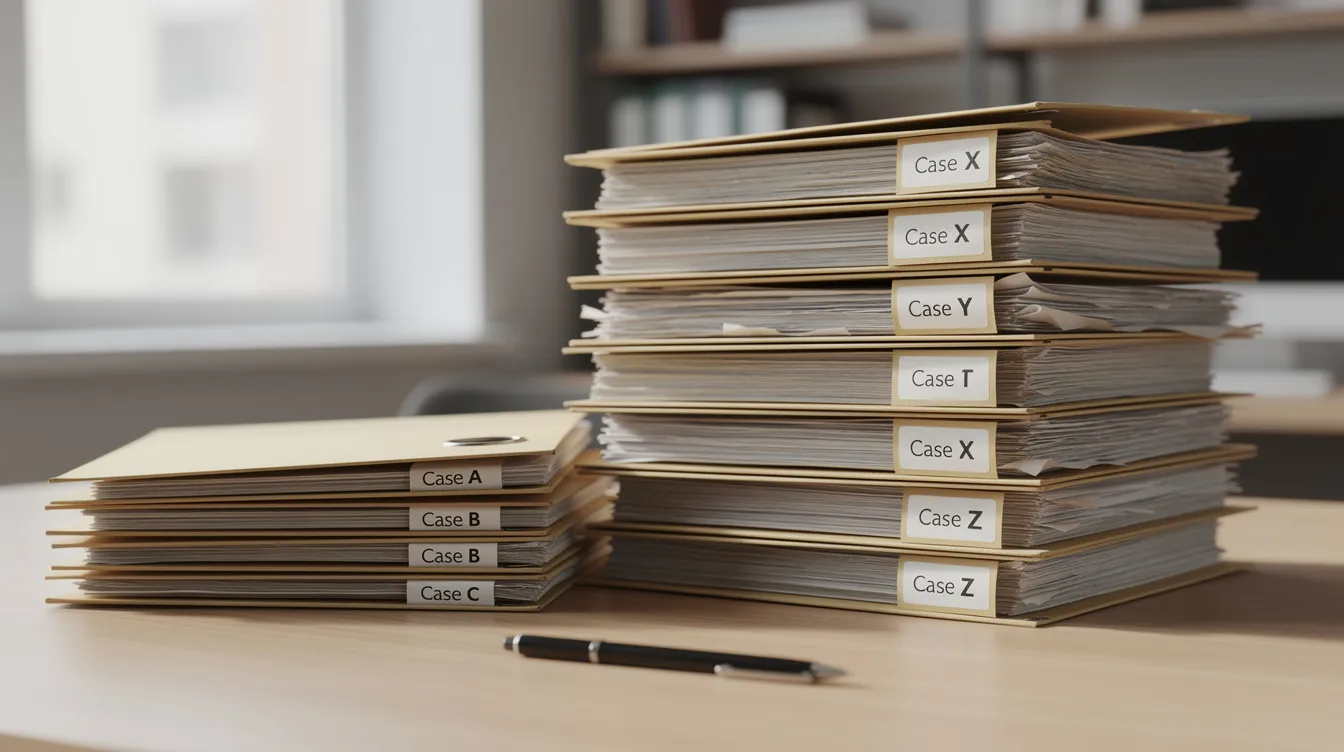
Behind the scenes, EEOC investigators may be reviewing your charge, reading the respondent’s position statement, checking documents from both sides, and planning next steps. They juggle many complaints at once. They batch tasks-phone calls one day, document review the next.
The agency may also be waiting for the employer to answer questions, provide records, or schedule witness interviews. During that waiting period, they usually will not contact the charging party unless they need something from you.
In most EEOC cases, the investigator only reaches out when they need more information, when they have a mediation offer, or when a determination has been made. Otherwise, the work continues quietly.
Does a Long Investigation Mean Something Is Wrong?
“My EEOC investigation has been going on for over a year. Does that mean my case is weak?”
Not necessarily. A long EEOC case timeline usually reflects workload and complexity-not the strength of your discrimination claim. Investigation duration depends on case complexity and cooperation from both sides.
Here’s what a long timeline does not mean:
- It does not mean the employer already won.
- It does not mean the agency found no reasonable cause.
- It does not mean your charge was ignored.
- The EEOC will not close a case without sending written notice to the charging party.
Some strong cases take longer because they involve more evidence, more witnesses, or may be part of a broader pattern the agency wants to investigate. The EEOC found merit in 17.4% of cases in 2925-and many of those took well over a year to resolve.
Many people Punchwork speaks with assume they did something wrong because of the delay. In reality, the slow pace is normal across EEOC investigations nationwide.
What Employees Should Do While Waiting
You can’t speed up the EEOC, but you can control what you do while the EEOC complaint process moves forward.
- Save and organize documents: Emails, texts, performance reviews, pay records, write-ups, schedules. Write dates clearly. These may become critical evidence later.
- Keep your contact information current: Update your address, phone, and email with the EEOC right away if anything changes. Check your spam folder regularly so you don’t miss a notice of right to sue.
- Respond quickly if asked: If the investigator asks for more information, respond promptly and clearly. Ask simple clarifying questions if you don’t understand what’s being requested.
- Build a timeline: Write down what happened, when, and who was involved. Include names, dates, and places. This helps when you need to respond to the employer’s claims.
- Consider talking with an employment-focused firm: During the wait, some workers choose to consult with a firm like Punchwork to better understand the EEOC investigation timeline, their options under federal laws like Title VII and the Equal Pay Act, and how to protect themselves from retaliation.
Common Myths About EEOC Investigations
Myths and rumors about EEOC charges make the waiting even more stressful. Here are four that come up constantly:
Myth 1: “If I haven’t heard anything, my case must be weak.” Silence is almost always about workload, not case merit. Applicants and employees with strong claims experience the same long waits as everyone else.
Myth 2: “Fast cases are better cases.” Quick closures happen for many reasons-including limited evidence or very narrow concerns. Speed alone is not proof of success. A fast closure can also mean there wasn’t enough to investigate, not that the discrimination didn’t happen.
Myth 3: “The EEOC forgot about me.” Every charge gets a case number. Electronic tracking systems and required closure letters make it very unlikely a case is simply lost, even when contact is rare. An individual can even file a complaint on behalf of someone else, and that charge still gets tracked the same way.
Myth 4: “The employer already won because it has lawyers.” Many employers hire attorneys to write their respondent’s position statement. That’s expected. It doesn’t give the employer control over the EEOC investigation process or determine the outcome. The agency looks at all the information-not just one side.
How This Waiting Period Fits Into the Bigger EEOC Case Timeline
Here’s a simplified view of what the EEOC charge timeline looks like from your side:
- Charge is filed – You submit your complaint (within 180 days of when the discrimination occurred, or within 300 days in states with a local enforcement agency). EEOC complaints require employers to have at least 15 employees under most federal laws.
- Employer gets notice – The EEOC generally notifies the employer within 10 days after a charge is filed.
- Employer responds – The employer submits a respondent’s position statement, usually within 30 days.
- Long investigation period – This is where most calendar time is spent. Documents are reviewed. Witnesses are interviewed. The agency may offer conciliation if it finds merit.
- Determination or notice – The EEOC issues a determination (reasonable cause or no cause) or a notice of right to sue. A complainant can also request a Notice of Right to Sue after 180 days from filing if they want to move forward on their own and file a lawsuit in federal court.
Most of the quiet time falls between steps 3 and 5. That’s exactly when employees tend to feel abandoned. Knowing this pattern can help you understand that months of quiet are built into the normal process.

Key Takeaways for Employees Waiting on an EEOC Investigation
- Long waits are common. The EEOC typically takes about 10 months to investigate complaints, and many cases take longer.
- Silence does not equal failure. The agency is usually working behind the scenes even when you don’t hear anything.
- Timelines vary a lot depending on your local office, the employer’s cooperation, and the complexity of your claims-including whether your case involves issues like national origin discrimination, sexual orientation, gender identity, disability, religion, genetic information, or national origin.
- There are concrete steps you can take: save documents, keep your contact info updated, and respond promptly when the investigator reaches out.
- A long investigation does not automatically mean something is wrong or that the Equal Employment Opportunity Commission has given up.
- The hardest part of this process is the waiting and uncertainty-not just the paperwork. Punchwork is a worker-focused firm that helps employees make sense of the EEOC complaint process and understand what their waiting period really means. Learn more about your workplace rights.
FAQs
These questions cover a few extra “what if” scenarios that often come up during the wait.
How can I check the status of my EEOC charge?
You can log into the EEOC Public Portal to view basic status updates, see the employer’s position statement (when allowed), and upload documents. Status labels are broad-“in investigation,” “in mediation,” “closed”-and don’t change often. Small shifts behind the scenes may not show up right away. If you want more detail, you can call or email your assigned investigator, but keep messages short and respectful. Heavy caseloads limit how much detail they can share, so don’t expect frequent updates on every step the agency takes to determine or enforce your rights under the Employment Act and related federal laws.
How long after the EEOC finishes will I get a Notice of Right to Sue?
Once the EEOC closes the investigation, it usually sends a written notice of right to sue by mail and sometimes through the online portal. In many cases, employees receive this notice within a few weeks of the decision. Allow for mailing delays and keep an eye on the portal. Make sure your mailing address is up to date so the notice doesn’t go to an old address-missing it could mean missing a critical deadline to sue in federal court. If the EEOC issued a finding that your employer violated equal opportunity protections, you may also receive information about back pay or other benefits the agency considered.
What if I move or change my phone number while my EEOC case is pending?
Update your contact information with the EEOC right away. Missing a letter or email can slow things down or cause you to miss a deadline. Log into the EEOC Public Portal or contact the office handling your charge to confirm the new information has been received. This is especially important if you are waiting for a notice of right to sue or a request for additional documents-those often come by mail without a follow-up call. The agency needs a reliable way to reach the charging party at every stage, from the moment the alleged discrimination is reported through hiring, employment, or any other workplace concern covered by your charge.
Is it okay to add new incidents to my EEOC complaint while I wait?
In many situations, you can ask the EEOC to amend your charge to include new, related events-especially if they are part of ongoing retaliation or continuing discrimination. But complaints must be filed within 180 days of discrimination (or 300 days in some states), and those deadlines apply to each new event. If something new happens-say you received a last discriminatory paycheck or were punished for cooperating with the investigation-contact the EEOC quickly. Talking with a firm like Punchwork can help you understand how new incidents fit within your existing EEOC investigation timeline.
Should I worry if the employer’s response sounds very strong or one-sided?
No. A respondent’s position statement is written from the employer’s point of view. It will almost always downplay or deny the worker’s story. That’s expected. The EEOC knows these documents are one-sided and reviews all the information-not just what the employer says. If you’re invited to respond, focus on facts, dates, and any documents that support your side. Avoid long emotional arguments. Stick to what happened, when it happened, and who was there. The agency’s job is to investigate the allegations and determine whether discrimination occurred, regardless of how polished the employer’s response looks.